
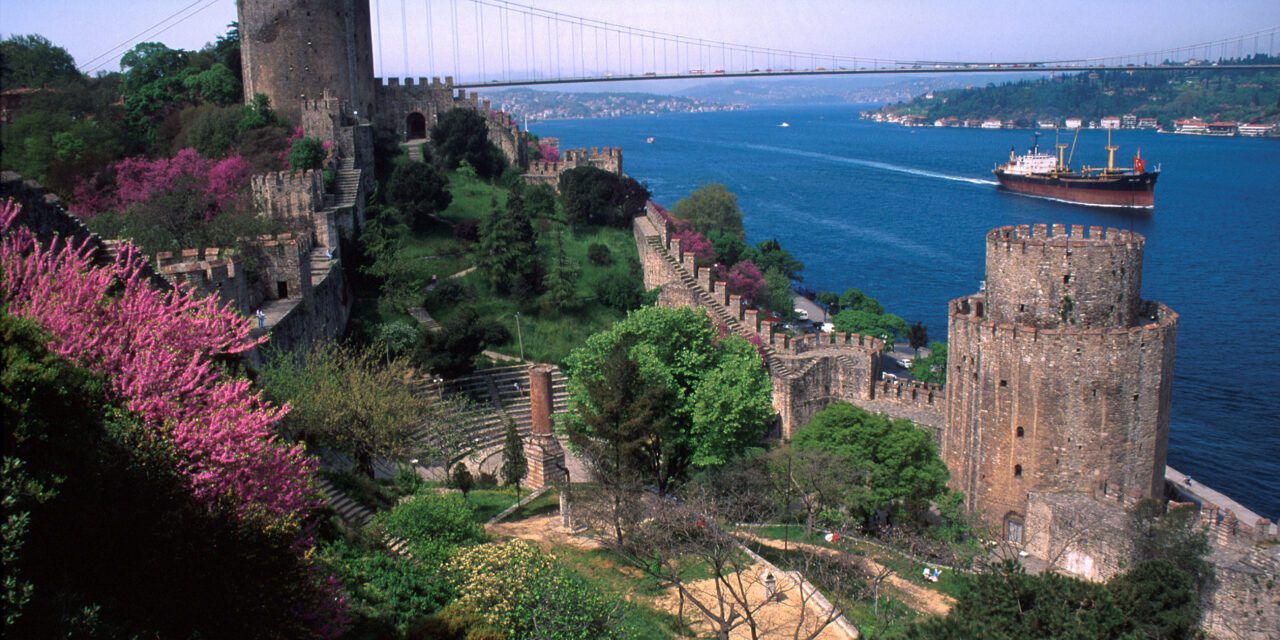
Must-See Sights of Antiquity in a Modern Land
From the perfect beaches and tranquil lagoons of the Mediterranean coastline dotted with ancient ruins or the magnificent mountains and virgin forests of the Anatolia peninsula, with their astounding variety of wildlife, flora and fauna to the pulse of cosmopolitan cities, Turkey is a captivating study in contrasts. There are countless things to see and do in Turkey.



In Istanbul:
Blue Mosque, Sultanahmet Camii
With its massive central dome flanked by six slender minarets, the Blue Mosque stands as the single most recognizable monument on the Istanbul skyline. Built between 1609-1616 during the reign of Ottoman Sultan Ahmet I, the enormous complex also included a hospital, caravansary, public kitchen, marketplace, schools and the Mausoleum of Sultan Ahmet I. The mosque’s immense interior, flooded with sunlight streaming through 260 windows, is decorated with more than 20,000 precious Iznik tiles detailing traditional flowers of Ottoman design. In fact, it is the deep blue glow of the tiles in sunlight that gives the building its name.
Hagia Sophia, Ayasofya
Built by Byzantine Emperor Constantine in the fourth century and reconstructed by Justinian in 537 A.D., this was the greatest church in Christendom for a thousand years, and remains an architectural masterpiece to this day. Its immense dome rises nearly 60 meters (200 feet) above the ground and is more than 30 meters (100 feet) in diameter. The Ottomans converted the basilica to a mosque in the 15th century, but today the Hagia Sophia serves as a public museum, known for its majestic serenity and fine Byzantine mosaics.
Topkapi Palace
Covering 696.000 square meters (172 acres), Topkapi Palace is a vast assemblage of garden-filled courtyards, richly decorated chambers, kiosks, pools and passageways.
South Aegean Coastline
Today, the Turkish Riviera on the Mediterranean coast, from Marmaris to Antakya, draws vacationers from Europe, Asia, Africa and America, just as it once drew the Phoenicians, Romans, and Seljuks. The capital of the Turquoise coast, Antalya is a bustling resort and commercial city, with a large new airport and an outstanding archeological museum. Pensions and posh inns fill the historic district of Kaleiçi, while fine restaurants ring the Roman harbor, making Antalya the perfect base for visiting sights of the region. Closer to the Aegean, is the yachting port of Bodrum, arguably Turkey’s most charming coastal town. Set on twin palm-lined bays and dominated by the medieval Castle of St. Peter, Bodrum is famous for its world-class Museum of Underwater Archeology, and for the grand Tomb of King Mausolus, the original mausoleum. As a favorite resort for Turkey’s artists, writers and the yachting set, the cafes are fashionable and the nightlife vibrant.
Konya
Located south of Ankara, Konya is one of the oldest continuously inhabited cities in Turkey. Known as Iconium during ancient times, it served as the capital of the Seljuk Empire during the 12th and 13th centuries and remains a significant cultural center today, studded with the remains of Seljuk grandeur. Every December, the city plays host to a week-long festival marking the death of Mevlâna Celaleddin Rumi, the great philosopher, poet and writer who founded the Mevlevi Order in the 13th century. Today, the Mevlâna Commemoration Ceremony is one of Mevlevi’s Whirling Dervishes, called semâ. Directed by the chelebi, or sheik, the ceremony starts just as it has for over seven hundred years, with a reading from the Koran accompanied by the haunting sounds of the ney, or reed flute. After further readings from a poem of praise for Mevlâna, the dance begins. The barefooted dervishes remove their black cloaks to reveal white robes, take position, and whirl across the floor to music. Though the semâ was held on all holy feast days during the Ottoman Empire, the ritual takes place now only during this celebration in this city.

Antioch, Antakya
Under Roman rule, the ancient city of Antioch, at the eastern end of Turkey’s Mediterranean region, was a splendid city. With a population of nearly half a million, Antioch ranked with Rome, Alexandria and Constantinople (Istanbul) as one of the four great cities of the Roman Empire, famous for its sophistication, quality of life and cultural diversity. The early Christian community gathered in Antioch, and many believe the Book of Matthew was written in the city between 80 and 90 A.D. St. Paul embarked upon his three missionary journeys from Antioch, and followers of Jesus were first called Christians here. In fact, a nearby cave known as St. Peter’s Grotto is believed to be where Peter preached when he visited Antioch. In 1963, the papacy designated the site as a


